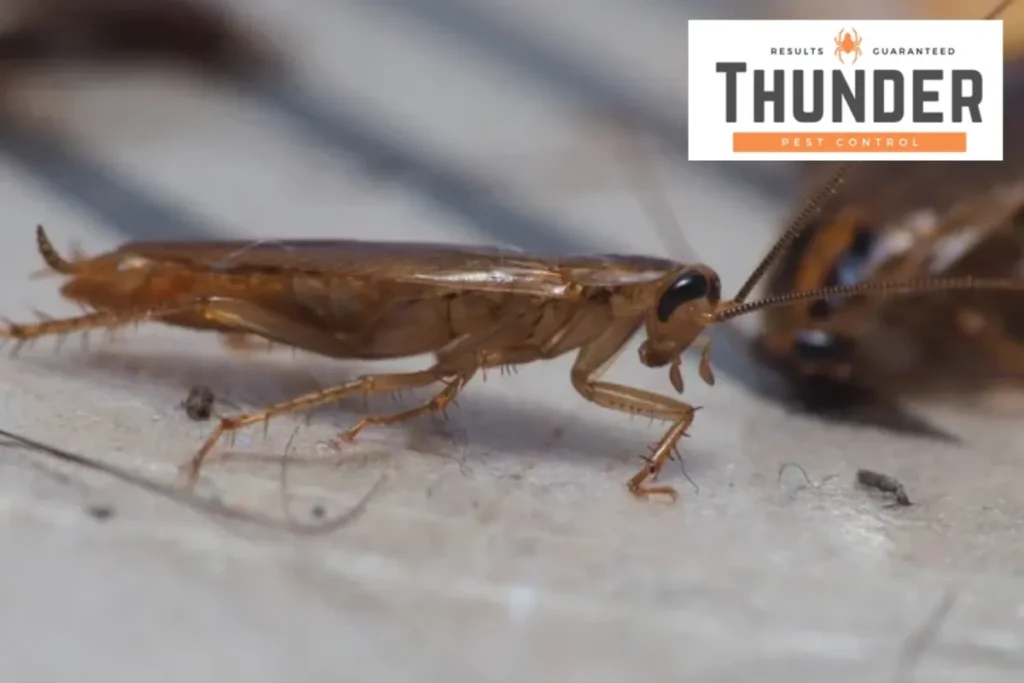
German cockroach infestations often persist because the population has developed a behavioral aversion to the sugar in baits or because competing food sources are more attractive than the treatment. Additionally, if the treatment lacks Insect Growth Regulators (IGRs) or misses “reservoir” nests inside electronic appliances, the colony will continue to rebound. Successful eradication requires rotating bait matrices and disrupting the reproductive cycle through professional intervention.
The frustration of seeing cockroaches scurry across a kitchen counter just days after a professional treatment is a common reality for many homeowners. This persistence isn’t due to a lack of effort but rather to the German cockroach’s incredible biological adaptability. Understanding the specific mechanics behind baiting failure is the first step toward a permanent, pest-free solution.
Top 5 Reasons Professional Baiting Fails
When addressing pest control in Durant, we often find that standard treatments fail because they treat the roaches as a monolithic problem rather than a dynamic biological challenge.
- Glucose Aversion: In a display of rapid evolution, some cockroach populations have developed a genetic trait where glucose, the primary sugar used in most baits, tastes bitter. If the roach won’t eat the bait, the treatment cannot work.
- Competing Food Sources: A single drop of grease behind a stove can sustain a female cockroach for weeks. If a home has competing food sources, the insects have no incentive to risk eating a foreign bait.
- Bait Contamination: Many homeowners try to “help” by using over-the-counter sprays. If these aerosols land on professional bait, they contaminate the pheromone attractants, making the bait repellent to the colony.
- The “Motor Housing” Refuge: German cockroaches love tight, warm spaces. They frequently nest inside the circuit boards of microwaves, refrigerators, and dishwashers, areas where standard baiting applications are often missed by inexperienced technicians.
- Lack of IGR Integration: Killing the adults you see is only part of the battle. Without an Insect Growth Regulator to stop the nymphs from reaching breeding age, the population will simply replenish itself within a month.
Bait Resistance vs. Bait Aversion
It is a common misconception that cockroaches are simply “immune” to poison. In reality, the failure is usually behavioral or physiological. During a recent audit for a client needing pest control in Durant, OK, we observed that while the roaches weren’t “immune” to the active ingredient, they were actively avoiding the bait stations entirely.
| Feature | Physiological Resistance | Behavioral Aversion |
| Cause | Genetic tolerance to the active toxin | Genetic change in taste receptors (Glucose) |
| Action | A roach eats the bait but survives | Roach refuses to touch or eat the bait |
| Solution | Switch active chemical class | Switch bait matrix (e.g., to protein-based) |
| Detection | Live roaches seen near empty bait | Bait remains untouched by insects |
To solve this, professional Durant pest control must involve “matrix rotation.” This means changing not just the poison but also the “food” part of the bait, switching from sweets to proteins or fats to bypass the cockroaches’ evolving palates.
Applying Our 50 Years of Combined Experience and Cutting-Edge Services
At Thunder Pest Control, we don’t believe in a one-size-fits-all approach. Our strategy is built on 50 years of combined pest control experience, which has taught us that every infestation has a unique “signature.” We combine this deep-rooted expertise with cutting-edge services to ensure that once the roaches are gone, they stay gone for good.
Our proprietary protocol focuses on three main pillars:
1. The Deep-Dive Inspection
Our experience has shown us that the “source” of an infestation is rarely where you see the roaches. We use thermal imaging and borescope cameras, part of our cutting-edge services, to look inside wall voids and appliance motors. By finding the “reservoir” populations, we can apply treatments where they will have the most impact.
2. Strategic Life-Cycle Disruption
Using our 50 years of combined pest control experience, we have perfected the use of multi-stage IGRs. We don’t just use one growth regulator; we use a cocktail that mimics juvenile hormones and chitin synthesis inhibitors. This ensures that even if a roach survives the initial baiting, it can never successfully reproduce or molt.
3. Precision Baiting Technology
We utilize high-pressure bait injectors to reach deep into cracks and crevices that standard tubes cannot access. This ensures our specialized, non-aversion baits are placed exactly where roaches feel safest, significantly increasing the treatment’s “hit rate.” This level of precision is a hallmark of our commitment to professional excellence.
Debunking the “Cleanliness is the Only Cause” Myth
There is a persistent industry myth that cockroaches are only found in “dirty” homes. This misconception causes a great deal of unnecessary shame for homeowners. In reality, even the most pristine kitchens can fall victim to an infestation. During a consultation for a property in a local neighborhood, we discovered that the infestation started from a simple cardboard delivery box from a warehouse.
German cockroaches are hitchhikers. They can survive on the glue in a book binding, the starch in wallpaper, or even a single smear of toothpaste. While sanitation is a critical component of maintenance, cleanliness alone will not eliminate a colony once it has established a “bridgehead” in your home. Professional intervention is the only way to break the biological cycle.
Technical Specifications for Modern Baiting
When you hire Thunder Pest Control, we utilize specific technical standards to ensure efficacy:
- Active Ingredients: We rotate between Indoxacarb, Dinotefuran, and Fipronil to prevent physiological resistance.
- Bait Placement Strategy: We apply “micro-dots” rather than large globs. Smaller dots increase the surface area and likelihood of a roach encountering the bait.
- Environmental Control: We advise on moisture reduction, as German cockroaches require a water source every 48 hours to survive.
- Life-Cycle Timing: We schedule follow-ups every 14 to 21 days to coincide with the hatching of new egg cases (oothecae).
People Also Ask (FAQ)
Why am I seeing more roaches after the professional came out?
Professional baits contain powerful pheromone attractants designed to draw roaches out from their hiding spots to feed. Seeing more activity initially means the bait is successfully competing with other food sources in your home.
How do I prepare for a cockroach treatment?
The most important step is to remove all competing food sources. Clean behind the stove, wipe down the inside of cabinets, and ensure no pet food is left out overnight. Avoid using any cleaning sprays on the day of the treatment, as this can interfere with the bait.
Are the baits safe for my pets?
Yes. When applied by our expert team, baits are placed in “voids” and crevices that are physically inaccessible to cats and dogs. The active ingredients are highly targeted toward insect biology.
Reclaim Your Peace of Mind with Thunder Pest Control
Dealing with an infestation is a threat to the comfort and safety of your home. You deserve a partner who is professional, reliable, and dedicated to your long-term success. At Thunder Pest Control, our family-oriented approach means we treat your home with the same care and transparency we would our own.
Our team provides the most effective solution by combining decades of wisdom with the latest technological advancements. We don’t just aim for a quick kill; we aim for a permanent solution that leaves you feeling assured and secure in your environment.
Don’t wait for the infestation to grow. Contact us today for a professional consultation and see how our 50 years of combined pest control experience and cutting-edge services can make your home a pest-free sanctuary once again.