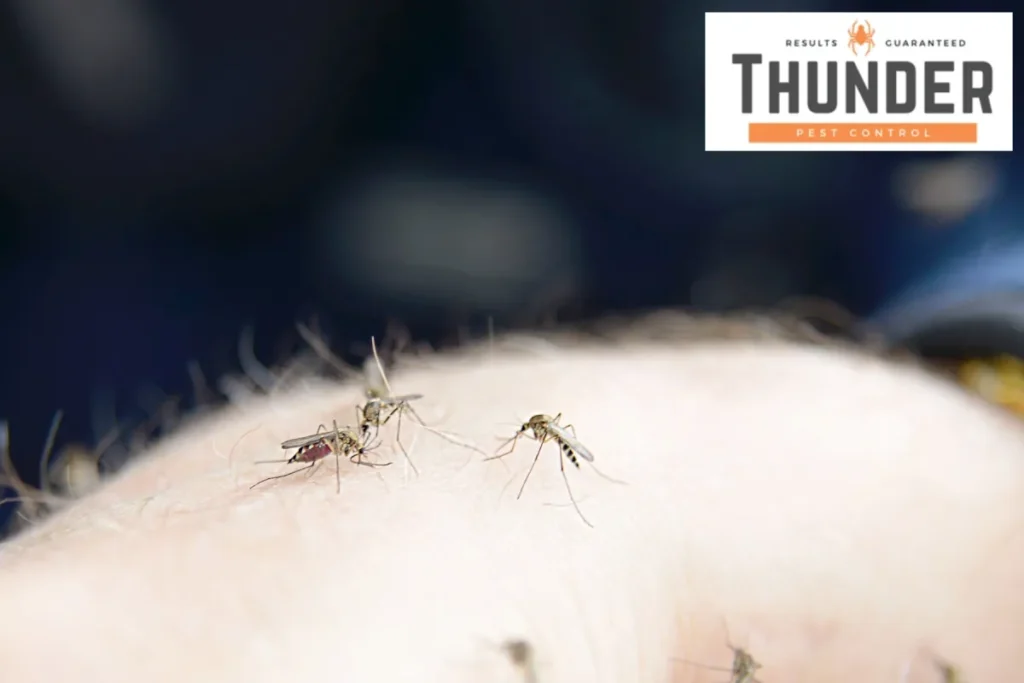
Mosquitoes can travel from a few hundred feet to several miles from their breeding sites, depending on the species, weather, and access to food and shelter. Many stay near where they hatch, while others travel farther to find humans, animals, and plant nectar. This explains why mosquitoes can appear in your yard even when you cannot find standing water nearby.
How Far Do Mosquitoes Typically Travel From Their Breeding Sites?
Mosquito flight distance varies by species. Some remain close to their breeding and resting areas, while others can travel much farther to find food or suitable shelter. Wind, temperature, humidity, and nearby habitats also affect their movement.
For homeowners, this means mosquitoes around a house may have come from a container of water, a drainage area, or a breeding habitat beyond the property line.
How Far Can Different Mosquito Species Travel?
Different mosquito groups have different movement patterns. The following table provides a general comparison, but actual flight distances vary by species and environmental conditions.
| Mosquito group | General movement pattern | Factors affecting movement |
| Aedes mosquitoes | Many species remain relatively close to breeding and resting areas | Nearby hosts, water-holding containers, and shaded spaces |
| Culex mosquitoes | Some stay near local habitats, while others travel farther | Host availability, weather, and resting areas |
| Anopheles mosquitoes | Flight range varies by species; some can travel several miles | Wind, habitat, and access to hosts |
These patterns are general rather than fixed distance limits. Finding a mosquito in your yard does not prove that it hatched there.
Why Do Some Mosquitoes Travel Farther Than Others?
Several factors influence how far mosquitoes move:
- Food availability: Female mosquitoes of many species seek blood meals to support egg production.
- Weather: Temperature, humidity, and wind affect flight and activity.
- Shelter: Shaded, humid areas provide places to rest and avoid drying out.
- Species: Some mosquitoes tend to stay close to their breeding sites, while others travel farther.
- Habitat: Nearby water, vegetation, and potential hosts influence where mosquitoes spend their time.
Even a property without obvious breeding sites can have mosquito activity if suitable habitats are present nearby.
What Makes Mosquitoes Travel Away From Their Breeding Sites?
Mosquitoes move to find food, shelter, mates, and places to lay eggs. Their movement is not limited to searching for blood.
Understanding these behaviors helps explain why mosquitoes gather around gardens, patios, and other outdoor spaces.
How Do Mosquitoes Find Humans and Animals?
Female mosquitoes of many species use several cues to locate potential hosts.
- Carbon dioxide: Humans and animals release carbon dioxide when they breathe. Mosquitoes can detect it and use it as a signal that a potential host is nearby.
- Body odor: Skin odors and other chemical cues help mosquitoes locate hosts.
- Body heat: Heat and other close-range signals help mosquitoes find a suitable place to land and feed.
These cues work together. Mosquitoes do not rely on one signal alone; their behavior depends on the cues they detect and the conditions around them.
Why Do Mosquitoes Search for Nectar?
Both male and female mosquitoes commonly feed on plant sugars for energy. Female mosquitoes of many species also need blood meals to produce eggs.
Flowering plants can therefore provide food for mosquitoes, while nearby vegetation offers places to rest. If water is available for breeding, these areas may support different stages of the mosquito life cycle.
Where Do Mosquitoes Rest Between Feeding Periods?
Mosquitoes often rest in protected places that help them avoid heat and reduce water loss. Common resting areas include:
- Dense shrubs and shaded vegetation
- Tall grass and ground cover
- Leaf litter and sheltered outdoor spaces
- Cool, humid areas around buildings
Finding adult mosquitoes in these places does not mean they are breeding there. They may rest in one location and travel elsewhere to feed or lay eggs.
What Environmental Factors Affect Mosquito Travel Distance?
Weather, moisture, wind, and the surrounding habitat all affect mosquito movement. These conditions can change where mosquitoes gather and when they are most active.
How Do Temperature, Humidity, and Wind Affect Mosquitoes?
Temperature: Mosquito activity depends on the species and the temperature. Conditions that are too cold or too hot can limit activity or affect survival.
Humidity: Moist air can help mosquitoes avoid drying out, making shaded and humid areas suitable resting places.
Wind: Strong winds can make flight difficult, while air currents may carry some mosquitoes beyond the distance they would otherwise travel under their own power.
Rainfall: Rain can create new breeding opportunities when water collects in containers, gutters, and low spots. Heavy rain may also disturb immature mosquitoes in some habitats.
These factors help explain why mosquito activity can change from one day to the next. An increase in mosquitoes does not always mean a new breeding site has appeared directly beside a home.
How Do Landscaping and Water Sources Affect Mosquito Movement?
Many mosquito species lay eggs in or near water. Some can use small amounts of standing water in plant saucers, buckets, clogged gutters, and discarded containers.
Landscaping also affects where adult mosquitoes rest. Dense plants and shaded areas may provide shelter during hot parts of the day. When these areas are close to people, mosquitoes may have easier access to potential hosts.
The nearest visible water source is not always the breeding site. Mosquitoes may emerge from hidden locations, including drainage areas or containers that are easy to overlook. If the problem persists, pest control in The Village, OK, can help identify potential mosquito sources and recommend suitable management options.
How Long Do Mosquitoes Search for Food?
There is no single amount of time that all mosquitoes spend searching for food. Activity depends on species, sex, weather, and access to suitable hosts or plant sugars.
Some species are more active in the evening or at night, while others may bite during the day. A mosquito that does not find a host immediately may continue searching when conditions allow.
A mosquito’s daily activity is also different from its lifespan. How long an adult lives depends on the species, temperature, moisture, predators, and other environmental conditions.
How Can You Tell Whether Mosquitoes Are Coming From Nearby or Distant Breeding Sites?
You cannot identify a mosquito’s exact breeding location just by seeing it fly around your property. However, a few checks can help you find possible sources and conditions that support mosquito activity.
- Check for standing water. Look in plant saucers, buckets, toys, clogged gutters, tarps, and other objects that collect water.
- Observe where mosquitoes gather. Note whether activity is highest near shrubs, shaded corners, patios, or other sheltered places.
- Look for hidden water sources. Check drainage areas and outdoor objects that may hold water after rainfall.
- Consider nearby habitats. Natural areas, drainage features, and neighboring properties may provide suitable breeding conditions.
- Watch for recurring activity. If mosquitoes remain noticeable after you remove standing water, other sources may be present, or adult mosquitoes may still be active.
Nearby Versus Distant Mosquito Sources
| What you notice | Possible explanation | What it does not prove |
| Mosquitoes gather near containers holding water | A nearby breeding source may be present | Every mosquito hatched in that container |
| Mosquitoes rest in dense vegetation | The plants may provide shelter | Mosquitoes breed in the vegetation itself |
| Mosquitoes remain after standing water is removed | Other breeding sources may exist | The source must be far away |
| Mosquitoes appear near a wetland or drainage area | The habitat may support mosquito populations | Every mosquito came from that location |
These clues can guide an inspection, but identifying a specific breeding source may require a closer look at the property and its surroundings. The Village pest control professionals can help assess potential mosquito breeding sites and recommend appropriate steps to reduce mosquito activity.
Common Mosquito Myth: Mosquitoes Always Stay Close to Where They Hatch
Many people assume mosquitoes never travel far from the water where they developed. While some species tend to remain near their breeding and resting areas, others can travel much farther.
Species, weather, food availability, and suitable shelter all influence movement. Wind may also affect how mosquitoes travel.
Another common mistake is assuming that standing water must be present in the yard for mosquitoes to appear. Breeding sites may be hidden in gutters, drains, containers, or nearby habitats. Adult mosquitoes may also move onto a property from surrounding areas.
Removing standing water is an important prevention step, but it may not immediately eliminate adult mosquitoes that are already active. Finding possible breeding sources and understanding adult movement provide a clearer picture of the problem.
Applying Our Family-Owned Approach and 50+ Years of Combined Experience to Mosquito Concerns
Thunder Pest Control is a family-owned business with 50+ years of combined experience. Our team focuses on clear communication, practical recommendations, and service tailored to each property’s needs.
That experience supports a careful approach to mosquito concerns. Instead of assuming every problem comes from a visible pool of water, we consider conditions such as standing water, shaded vegetation, drainage, and areas where adult mosquitoes may rest.
Step 1: Identify Conditions That Support Mosquito Activity
A property assessment can help identify water-holding containers, drainage concerns, and sheltered areas that may contribute to mosquito activity. These observations help determine which conditions should be addressed first.
Step 2: Recommend Practical Prevention Steps
Homeowners can reduce some breeding opportunities by emptying containers that collect water, clearing gutters, and addressing drainage problems. Trimming overgrown vegetation may also reduce sheltered resting areas near outdoor living spaces.
Step 3: Discuss Suitable Mosquito Management Options
When mosquito activity continues, a professional can help assess the situation and discuss suitable management options. Recommendations depend on the property, observed activity, and environmental conditions.
As a family-owned business, Thunder Pest Control values accountability and customer satisfaction. If you need an exterminator in The Village, OK, our goal is to explain the problem clearly, recommend appropriate next steps, and help you make informed decisions without promising that mosquitoes will never return.
People Also Ask About Mosquito Travel Distance
How far can mosquitoes fly from where they hatch?
Many mosquitoes stay relatively close to their breeding sites, but some species can travel several miles. The actual distance depends on the species, weather, and availability of food and shelter.
Can mosquitoes travel from a neighbor’s yard to my property?
Yes. Mosquitoes can move between nearby properties, depending on their species and the surrounding conditions. Their presence does not necessarily mean they hatched on your property.
Do mosquitoes travel farther when they cannot find food?
Mosquitoes may continue searching for suitable food sources, but hunger alone does not determine how far they travel. Species, weather, and habitat also affect their movement.
Can mosquitoes breed far away and still reach my yard?
Yes. Some mosquitoes can travel substantial distances from their breeding habitats. However, many species tend to remain closer to where they emerge, so the distance varies.
Why do I have mosquitoes when there is no standing water in my yard?
Mosquitoes may be coming from nearby properties or surrounding habitats, or a hidden breeding site may have gone unnoticed. Check gutters, drains, containers, and other places where water can collect.
Get Help With Mosquito Problems Around Your Property
Mosquitoes can travel different distances depending on their species and the conditions around them. Removing standing water is a useful first step, but recurring activity may call for a closer look at the property’s surroundings. Thunder Pest Control can help assess mosquito concerns and recommend suitable management options.
Contact us today to request a consultation or quote. Our team aims to provide reliable service, clear recommendations, and practical support for managing mosquito activity.