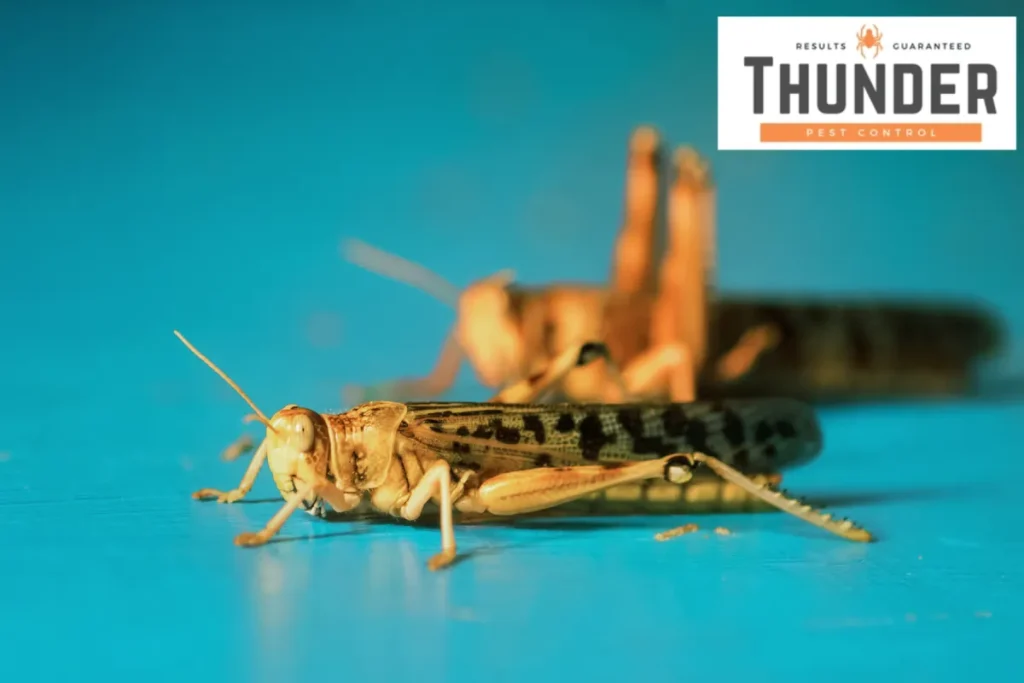
Field and house crickets cause extensive damage to indoor fabrics, rugs, and upholstered furniture because they are omnivorous scavengers attracted to organic residues, animal fibers, and food soils left on household items. Using mandibles designed to tear organic matter, crickets chew through natural and synthetic threads to ingest trapped moisture, perspiration salts, and food particles.
Discovering torn upholstery or frayed rug edges can be deeply frustrating for any homeowner. While many people view crickets merely as noisy, chirping pests, their presence indoors poses a direct threat to your home’s furnishings. As opportunistic scavengers, these insects seek out warmth, shelter, and nutrient-rich materials once outdoor weather turns harsh.
During a recent inspection for a home in Lawton, our technicians found cricket damage concentrated along the base of living room drapes and sofa cushions. The insects had moved inside seeking moisture and began feeding on unseen food spills and perspiration residues embedded in the fabric. Understanding why field and house crickets cause extensive damage to indoor fabrics, rugs, and upholstered furniture is essential for protecting your property and preventing costly replacement bills.
Cricket Species Damage Comparison (Field vs. House Crickets)
Behavioral Traits & Feeding Characteristics
Comparing outdoor field crickets with indoor-adapted house crickets highlights distinct behavior patterns, lifespans, and material damage risks. The table below breaks down how each species impacts your living areas.
| Feature / Metric | Field Crickets (Gryllus spp.) | House Crickets (Acheta domesticus) | Property Impact Comparison |
| Primary Habitat | Outdoor leaf piles, mulch, landscaping | Indoors, warm crawl spaces, basements | House crickets breed continuously indoors, increasing fabric damage risks. |
| Indoor Lifespan | Limited indoors; entry triggered by weather | Long-term; thrives in warm, humid structures | House crickets pose a prolonged threat to stored textiles and upholstery. |
| Material Targets | Soiled cottons, wool, outdoor upholstery | Rugs, drapes, silk, synthetic blends | Both species target natural fibers stained with food or sweat. |
| Feeding Style | Surface chewing causing frayed carpet piles | Deep fiber pulling creating irregular holes | Both species weaken underlying fabric weave and ruin furniture aesthetics. |
| Prevention Priority | Perimeter exclusion and weather sealing | Sub-level moisture and indoor humidity control | Requires combined exterior barriers and indoor harborage management. |
Both species present serious risks to indoor furnishings when left unchecked. Addressing entry points and humidity levels prevents long-term destruction.
Fabric Degradation Specifications & Structural Attractants
Material Vulnerabilities & Feeding Triggers
Understanding how crickets target specific household textiles reveals why certain items suffer worse damage than others.
Perspiration & Body Soil Residues
Core Attractant: Keratin particles, salt, and sweat accumulated on clothing, rugs, and furniture.
Degradation Factor: Insects target stained areas first, chewing through threads to ingest organic salts.
Visual Symptom: Frayed, weakened spots concentrated along headrests, sofa arms, and unwashed clothing.
Natural vs. Synthetic Fiber Vulnerability
Core Attractant: Wool, cotton, linen, silk, and starch-treated synthetic blends.
Degradation Factor: While preferred target fibers are natural, insects may chew through synthetic threads to reach underlying stains or sizing.
Visual Symptom: Irregular, rough-edged holes with severed warp and weft threads across carpets and drapes.
High Humidity & Indoor Water Access
Core Attractant: Ambient moisture near sumps, laundry rooms, and damp basements.
Degradation Factor: Insects may chew moisture-laden fabrics to hydrate when open water sources are scarce.
Visual Symptom: Damage concentrated near carpet edges, basement upholstery, and damp storage boxes.
Taking early action protects your valuable items from irreparable harm. Homeowners looking for dependable pest control in Lawton, OK, rely on these diagnostic details to stop infestations before fabrics are ruined.
Step-by-Step Professional Cricket Control Process
How Technicians Resolve Indoor Infestations in 4 Steps
When certified specialists visit your property, they execute a targeted four-step plan to eliminate active populations and protect your furnishings.
- Conducting a Comprehensive Moisture & Harborage Audit: Technicians evaluate dark, damp indoor areas, including basements, laundry rooms, and crawl spaces, to identify active harborage zones.
- Inspecting Exterior Entry Points: Specialists locate gaps in foundations, loose door sweeps, and unsealed utility lines that allow outdoor insects to migrate inside.
- Applying Targeted Microencapsulated Formulations & Granular Baits: Technicians apply specialized residual treatments along exterior perimeters and sub-level indoor harborage points.
- Implementing Exclusion & Moisture Reduction Recommendations: Experts guide homeowners on sealing cracks, reducing yard clutter, and ventilating damp areas to prevent future infestations.
This systematic approach targets both current populations and future invaders. It ensures your indoor living spaces remain secure and comfortable.
Applying Our Proven Expertise to Solve This
Dedicated Property Defense with Thunder Pest Control
At Thunder Pest Control, we take pride in being a family-owned and operated company dedicated to protecting homes and local businesses. We understand the stress that indoor pest damage causes and work hard to restore your peace of mind.
We deliver the most efficient, cutting-edge services to eliminate scavenging pests quickly and safely. By applying a specialized perimeter barrier around your foundation, we block entry pathways before insects ever reach your living areas.
Our technicians combine deep industry knowledge with friendly, transparent service. Homeowners seeking reliable Lawton pest control trust our experienced team to deliver long-term protection and exceptional care.
Understanding why field and house crickets cause extensive damage to indoor fabrics, rugs, and upholstered furniture helps us deliver targeted solutions that safeguard your belongings. We treat every customer’s home with the same attention and care as our own.
Common Industry Misconception: “Crickets Only Eat Fabrics When They Are Starving”
Debunking the Emergency-Feeding Myth
A widespread myth among homeowners is that insects chew on fabrics and furniture only as a last resort when starving in an attic or basement. In reality, these scavengers actively seek out fabrics stained with sweat, food spills, or starch additives.
They consume these materials even when outdoor food sources are abundant because household textiles offer concentrated salts, moisture, and minerals. Partnering with an experienced Lawton exterminator ensures your home receives proactive protection that stops fabric damage before it starts.
People Also Ask (FAQ)
How do I know if fabric damage is caused by crickets rather than moths or carpet beetles?
Cricket damage features large, irregular holes with chewed, frayed edges across surface fibers. Unlike clothes moths, which leave fine webbing, or carpet beetles, which leave shed skins, crickets leave distinct fecal spotting and frayed textile threads.
Why do crickets gather in basements and laundry rooms?
Crickets require high humidity and dark, quiet environments to survive. Basements, crawl spaces, and laundry rooms offer water leaks, sump pumps, and damp air that attract crickets indoors.
Can clean fabrics still be damaged by indoor crickets?
Yes. While soiled fabrics with sweat or food residues are targeted first, crickets will chew through clean natural fibers (like wool or cotton) for hydration or starch additives.
Why choose Thunder Pest Control for indoor insect management?
Thunder Pest Control combines a family-owned approach, decades of experience, advanced barrier treatments, and a commitment to customer satisfaction for total peace of mind.
Conclusion
Uncontrolled insect infestations pose a serious threat to indoor rugs, clothing, and upholstered furniture. By understanding their scavenging habits and securing professional perimeter barriers, you can protect your valuables and maintain a safe, comfortable home.
Give your home the protection it deserves with safe, reliable, and guaranteed pest solutions. Our dedicated team at Thunder Pest Control is ready to inspect your property and build a custom protection plan.
Contact us today to restore your peace of mind!