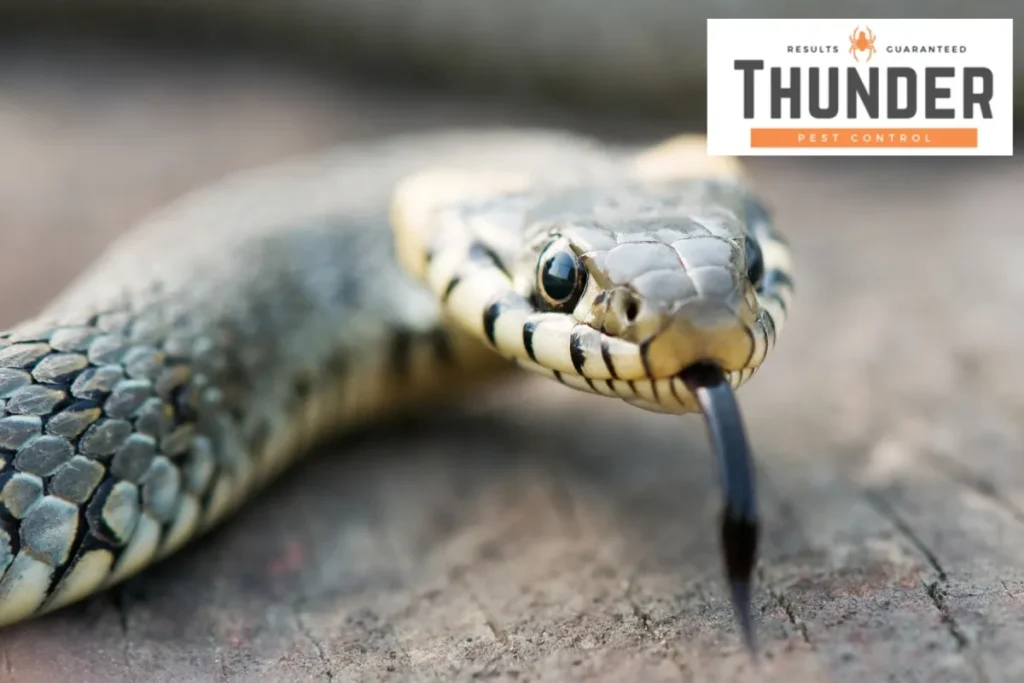
To tell if a snake in your yard is venomous before calling snake control services, check its head, eyes, and body from a safe distance: pit vipers like copperheads and rattlesnakes feature triangular heads with distinct necks, elliptical slit pupils, facial heat-sensing pits between the eyes and nostrils, and single-row scales on their underbellies near the tail. Harmless species usually have rounded heads, round pupils, and smooth tail scales. If you cannot safely verify these features from at least six feet away, keep your distance and contact a professional exterminator immediately.
Quick Reference: Venomous vs. Non-Venomous Physical Traits
When observing snakes on your property, never attempt to pick up, pin, or corner them. Use this simple comparison table to evaluate physical markers from a safe distance using binoculars or a smartphone camera zoom.
| Physical Feature | Venomous (Pit Vipers) | Non-Venomous (Harmless Species) |
| Head Shape | Broad, arrow-shaped, or triangular with a distinct, narrow neck | Rounded head that blends smoothly into the neck without tapering |
| Pupil Shape | Vertical slits (cat-like) | Round pupils |
| Facial Features | Heat-sensing pit organs between eyes and nostrils | No facial pit organs present |
| Underside (Tail) | Single row of scales across the bottom behind the vent | Double row of divided scales near the tail tip |
| Tail Structure | Rattles (rattlesnakes) or blunt, dark tips (copperheads) | Tapered, smooth, pointed tail end |
Detailed Physical Traits to Inspect From a Safe Distance
Knowing what details to look for can help you stay safe while providing your technician with useful information when scheduling professional snake removal.
Head Shape
- Triangular head: May indicate a viper or another venomous species, but head shape alone is not a reliable way to identify a snake.
- Round or less-defined head: Common among many nonvenomous snake species.
Pupils
- Slit-like pupils: Can be found in some venomous snakes.
- Round pupils: Common among many nonvenomous species.
Pupil shape can be difficult to see from a safe distance and should not be used by itself to determine whether a snake is dangerous.
Facial Pit Organs
Some venomous snakes have visible heat-sensing pit organs located between the eye and nostril.
Do not approach a snake to look for these features. If you cannot safely identify the species, treat the snake cautiously and keep your distance.
What to Do After Observing the Snake
If you notice a snake near your home:
- Stay at a safe distance.
- Do not attempt to handle, corner, or capture it.
- Keep children and pets away from the area.
- Note its approximate size, color, and markings from a safe location.
- Contact a qualified wildlife or snake removal professional if removal is necessary.
Physical characteristics can provide useful clues, but they are not always enough to safely identify a snake. When in doubt, avoid approaching it and let a trained professional handle the situation.
1. Head Shape and Neck Definition
Venomous pit vipers carry venom glands behind their jaws, causing their heads to flare out into a triangular shape with a distinct neck pinch. In contrast, non-venomous species have rounded heads that slope smoothly straight into their body length.
2. Pupil Structure and Eye Location
From a safe distance, look closely at the eyes:
- Vertical Slits: Venomous species feature thin, vertical pupils.
- Round Pupils: Most non-venomous species possess round pupils.
Safety Warning: Non-venomous species can dilate their pupils in low light, making them appear vertical. Never rely on pupil shape alone to handle a wild reptile.
3. Facial Heat-Sensing Pits
Pit vipers earn their name from heat-sensing pits located between their nostril and eye on each side of their face. These small pits detect warm-blooded prey in low-light conditions. Non-venomous species lack these facial pits entirely.
4. Coloration and Pattern Identification
While color patterns vary, learning local venomous patterns helps clear up confusion quickly:
- Copperheads: Feature tan bodies overlaid with dark brown “hourglass” markings that widen along the lower sides.
- Rattlesnakes: Feature heavy-bodied frames with dark diamond or banded patterns, ending in a segment-jointed tail rattle.
- Garter Snakes: Display yellow or green stripes running from head to tail.
Common Myths About Snake Identification Debunked
Relying on urban legends can put you in harm’s way. Here is the truth behind common identification myths.
Myth 1: “If the snake’s head flattens out, it is definitely a venomous copperhead.”
Fact: Non-venomous species like hognose snakes, bullsnakes, and water snakes flatten their heads and swell their bodies when threatened. This defensive posture mimics pit vipers, but these snakes are entirely harmless to humans.
Myth 2: “Snakes found swimming in water are always venomous water moccasins.”
Fact: Non-venomous water snakes frequent lakes, ponds, and creek beds alongside cottonmouths (water moccasins). A helpful distinction is how they swim: non-venomous water snakes swim with only their head visible above the water while their body remains submerged. Water moccasins swim buoyed up high on top of the water line.
Myth 3: “Baby snakes are more dangerous than adult snakes because they cannot control their venom.”
Fact: While juvenile venomous snakes do yield potent venom, adult snakes carry larger venom reserves and deliver stronger bites overall. Venomous reptiles of any size demand professional management.
Essential Terminology
- Pit Viper: A subfamily of venomous snakes (including rattlesnakes and copperheads) identified by heat-sensing pit organs located between their eyes and nostrils.
- Brumation: A state of dormant inactivity that cold-blooded reptiles enter during cold weather months, reducing their metabolic rate until ambient heat rises above 75°F.
- Snake Exclusion: Physical barrier modifications, such as heavy-gauge mesh covers, foundation sealing, and vent guards, that stop snakes from entering crawl spaces and outbuildings.
- Prey Suppression: A targeted pest control methodology that eliminates local rodent and insect populations to remove the main food supply attracting wild snakes.
Applying Our Proprietary Shield Method to Solve Snake Infestations
At Thunder Pest Control, we bring 50 years of combined pest control experience to every property we evaluate. Simply chasing off a visible snake does not address why the reptile picked your yard in the first place. That is why we implement the most efficient, cutting-edge services to provide reliable, long-term relief.
Our process relies on three core pillars:
- Customized Service Plans: Every home layout, ground cover type, and yard boundary is different. Our highly trained and experienced Duncan exterminators complete a thorough property inspection to pinpoint active hiding spots, such as firewood stacks, overgrown shrubbery, leaf piles, and open foundation gaps.
- Eco-Friendly Treatments: We prioritize family, pet, and environmental safety above all else. Our team utilizes eco-friendly treatments featuring effective, non-disruptive repellents and structural barriers that guide snakes away without harming local wildlife or introducing harsh residues to your soil.
- Integrated Prey Suppression: Snakes rarely frequent yards that lack a steady food source. During a recent audit for a property, our technicians found an unaddressed field mouse nest under an outbuilding that was drawing copperheads to the back door. By combining rodent management with physical exclusion barriers, our team cut off the primary attractant and eliminated the hazard.
Whether you need a dedicated exterminator in Duncan, OK, or immediate assistance, our protocol keeps your yard safe and clear year-round.
Step-by-Step: What to Do When You Spot a Snake
If you locate a snake near your porch, garden, or crawl space, follow these steps to stay safe:
- Back Away Slowly: Step back at least six to eight feet. Snakes strike only when they feel cornered.
- Isolate Pets and Children: Move dogs, cats, and children indoors immediately to prevent accidental bites.
- Maintain Visual Contact: Watch where the snake slithers from a safe distance. Knowing its hiding spot saves time when your technician arrives.
- Do Not Attempt to Trap or Kill It: Most bites occur when homeowners try to capture or strike the animal using garden tools.
- Contact Professional Control Services: Call a specialized Duncan pest control provider who can safely remove the reptile and assess your property for structural entry points.
People Also Ask
How do I know if a snake has made a nest on my property?
Snakes do not build traditional nests, but they congregate in dark, damp shelter spots called hibernacula. Look for shed snake skins, small burrow holes along foundation lines, unexpected droppings containing fur or bone fragments, or strong musky odors in damp spaces like basements and crawl spaces.
Will home remedies like mothballs or sulfur keep snakes away?
No. Mothballs and powdered sulfur are ineffective at deterring wild snakes. Using mothballs outdoors contaminates soil and poses toxic risks to pets and children. Physical barrier installation, lawn maintenance, and professional exclusion services provide proven protection.
Why are snakes appearing around my home’s foundation?
Snakes seek out heat-retaining surfaces like concrete slabs, rock walls, and brickwork to regulate their body temperature. They are also drawn to shaded foundation gaps, damp leaf piles, and unsealed vents while hunting mice or small prey.
When are snakes most active throughout the year?
Snakes become active when outdoor temperatures consistently rise above 75°F, typically between mid-spring and early autumn. During colder winter months, they enter brumation inside warm wall voids, rock piles, or underground dens, emerging once warmer weather returns.
Protect Your Home and Family with Thunder Pest Control
Discovering a snake on your property can be unsettling, but you do not have to manage it alone. At Thunder Pest Control, we operate as your reliable partner for comprehensive pest management. We deliver exceptional service backed by total transparency, uncompromising safety standards, and dedicated customer care.
Our goal is to ensure you feel completely assured, confident, and secure in your home. When you work with our team, you gain access to half a century of hands-on expertise, family-oriented service values, and tailored pest containment plans that produce lasting results.
Don’t let unwanted snakes take over your peace of mind or prevent you from enjoying your yard. Schedule our service today and discover how simple, safe, and effective professional pest management can be!
.