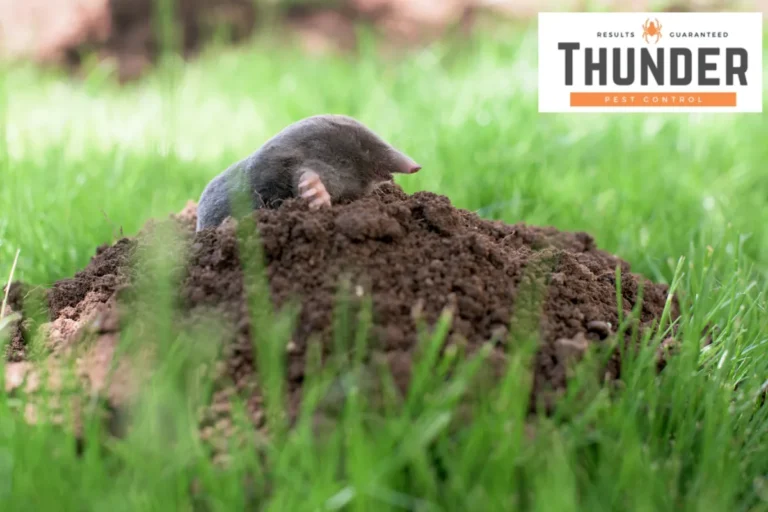
Gophers return after you fill their tunnels because pushing dirt back into surface holes leaves their deep, main runway networks completely intact. Simply collapsing entry plugs does not eliminate the active pest, nor does it block neighboring gophers from immediately moving into the empty, pre-excavated tunnel system.
You spend your Saturday shoveling dirt, leveling unsightly mounds, and patching up your grass, only to wake up Monday morning to a brand new pile of soil in the same spot. When you are dealing with burrowing pests on your property, it can feel like your weekend efforts disappear overnight. Pushing dirt back into surface holes seems like a logical quick fix, but these underground creatures operate inside a complex network of tunnels that surface patching never reaches. To stop the endless cycle of digging and repair, you need to understand how these subterranean systems work and why simple surface fixes fail every time.
5 Primary Reasons Gophers Reoccupy Collapsed Burrows
Filling surface mounds with soil, gravel, or rocks is rarely a long-term fix. Understanding why these burrowing animals easily reclaim their underground territory helps explain why standard DIY methods fall short:
- Deep Main Runway Networks Remain Intact: Surface mounds are merely exit vents for lateral tunnels that the animal uses to push out excess soil. The primary horizontal runway system sits 4 to 12 inches deep, and can dive several feet down during colder weather. Filling the surface exit leaves main living quarters, food chambers, and travel paths completely undamaged.
- The “Vacuum Effect” Invites Neighbors: These rodents live solitary lives and aggressively defend their territory. When a burrow network becomes vacant, whether the original owner died or moved away, neighboring animals quickly detect the empty, pre-dug tunnels and move right in.
- Loosened Dirt Is Easy to Clear: Pushing loose soil or gravel back into an entry plug gives the animal soft, uncompacted dirt. Using their short, powerful front legs and heavy claws, they can clear out loose fill dirt in a matter of minutes.
- Abundant Plant Roots Persist: Filling a hole does not remove the food source that drew the pest there in the first place. These animals feed heavily on grass roots, dandelions, trees, and garden crops. As long as healthy roots remain, they have every reason to re-open the tunnel.
- Multi-Level Tunnel Systems: A single burrow network can contain hundreds of feet of interconnected pathways, nesting rooms, and deep storage vaults. Collapsing one surface exit leaves the rest of the underground complex fully usable.
During a recent property assessment for a ranch owner in Madill, our team inspected a single yard where over thirty surface mounds were all connected to one active underground highway.
Direct Comparison: Tunnel Filling Methods vs. Long-Term Efficacy
Understanding how different control methods perform helps homeowners stop wasting time and money on temporary fixes.
Comparison Table: Gopher Control Efficacy
| Method | Efficacy Rate | Effort Level | Structural Network Impact | Re-Infestation Risk |
| Manual Dirt Refilling | Very Low (< 10%) | High (Continuous) | Zero (Only blocks surface exits) | Extremely High |
| Water Hose Flushing | Very Low (< 15%) | Medium | Minimal (Water drains into deep soil) | Extremely High |
| Castor Oil & Repellents | Low (Temporary) | Low | None (Does not alter tunnels) | High |
| Underground Wire Mesh | High (Exclusion) | High (Initial Install) | High (Physically blocks root access) | Very Low |
| Targeted Professional Control | Very High (> 90%) | Low (Professional) | High (Removes pest & blocks network) | Low (When paired with barriers) |
Choosing reliable pest control in Madill, OK allows property owners to target active main runways directly instead of wasting hours shoveling dirt back into empty surface holes.
Key Terminology & Burrow Network Specifications
Lateral Tunnel
A short, angled side-branch off the main run used to push excavated soil out to the surface, creating a characteristic horseshoe-shaped dirt mound.
Main Runway
The primary horizontal tunnel system, typically 4 to 12 inches below the surface, where burrowing rodents forage, travel, and sleep.
Plugged Entry
A packed plug of soil placed at the tunnel entrance to regulate temperature, hold in humidity, and keep out natural predators like snakes.
Subterranean Exclusion Barrier
Hardware cloth or galvanized wire mesh buried 18 inches underground with a 10-inch above-ground lip to physically stop digging pests.
Vacuum Effect
The biological pattern where an empty, intact tunnel network attracts nearby pests to move in and take over the existing structure.
Applying our Integrated Management Protocol to Solve This
Simply filling in dirt mounds keeps property owners stuck in a frustrating loop. At Thunder Pest Control, we bring over 50 years of combined pest control experience to provide the most efficient, cutting-edge services built on proven integrated management (IPM) strategies.
Our systematic approach tackles burrowing pest activity across three distinct phases:
- Subterranean Main Runway Mapping: We use specialized probes to locate active main runs 4 to 12 inches deep, ignoring old, inactive surface lateral plugs.
- Targeted Population Removal: We place precision mechanical controls directly into active runs, eliminating active pests without damaging your lawn or garden beds.
- Long-Term Exclusion & Habitat Modification: We help property owners install subterranean barriers around gardens and adjust irrigation schedules to reduce loose, moist soil conditions that attract burrowing pests.
When a homeowner called us for Madill pest control after their garden roots were destroyed, our technicians mapped out two active main runs entering from a nearby field and stopped the damage in its tracks.
Debunking the Industry Myth: “Flooding Tunnels with Water Destroys the Colony”
A popular DIY myth claims that sticking a garden hose into a hole and running water will drown gophers or collapse their tunnels permanently. In reality, water flushing almost never works. These subterranean networks feature porous soil that absorbs water quickly, and the animals construct high-point nesting chambers specifically designed to trap air pockets during heavy rain. When water enters, the animal simply retreats to a dry chamber, plugs the tunnel behind it, and waits for the water to drain.
People Also Ask
Q: How deep do gopher tunnels actually go?
Primary foraging runs sit 4 to 12 inches below the surface, but deep nesting rooms and winter quarters can extend 5 to 6 feet down below the frost line.
Q: Will burrowing pests leave my property on their own?
Rarely. They stay as long as there are plant roots, dandelions, and moist soil to feed on. Even if one dies, the empty tunnel network will soon draw in a new occupant from a neighboring yard.
Q: Why hire a professional exterminator instead of using store-bought traps?
Store-bought traps are often placed in inactive surface mounds where pests never return. A professional exterminator knows how to locate deep, active main runways to remove the pest quickly and protect your lawn from ongoing damage.
Property owners often find that working with an exterminator in Madill, OK saves hundreds of dollars in plant replacement and lawn repairs by identifying and addressing pest problems before they cause extensive damage.
Reclaim Your Lawn with Reliable Pest Control Solutions
Continuously filling in surface holes without addressing the main tunnel network is a losing battle. Protecting your yard and garden requires targeted removal combined with long-term subterranean protection.
At Thunder Pest Control, we are dedicated to providing clear, safe, and effective solutions for your home or business. We treat our customers like family and take pride in delivering lasting results without hassle. Whether you are dealing with burrowing pests, termites, rodents, or mosquitoes, our experienced team is here to help.
Tired of filling holes every weekend? Call us today to schedule a professional evaluation and get your free quote!